One optimized system instead of a customization approach
We concentrate our entire development on a single fuel cell system for heavy-duty long-haul transport. Complete in-house development and production of every component, the stack and the system ensures everything is optimized to work together. This is how we achieve best-in-class performance and total cost of ownership at the same time.
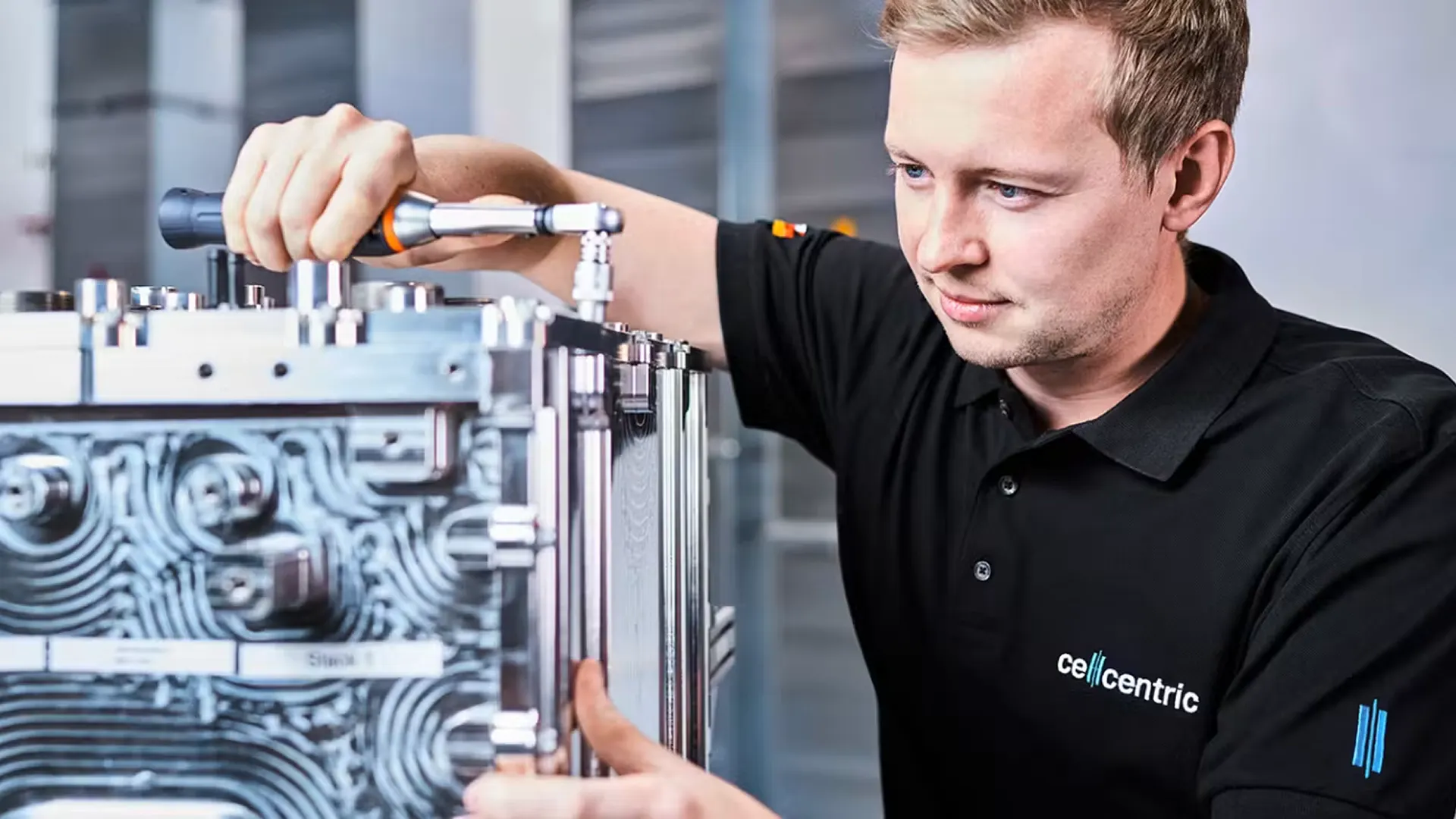
Built for the demands of long-haul trucking
Commercial vehicles serve a broad variety of use cases and requirements. But designing a custom-tailored system for every application increases complexity and undermines economies of scale, which works against our goal of making fuel cells commercially competitive with diesel. We therefore concentrate development on a single product for on-road heavy-duty long-haul transportation. The complete in-house development and production of components, stack and system ensures everything works together as cleanly and efficiently as possible. And because we design for the highest performance level first, our systems are also well-suited for coaches, stationary power generation, rail and mining.
Four reasons fuel cells are central to the future of commercial vehicles
Weight
The entire fuel cell powertrain, including hydrogen tanks and the hybrid battery, reaches a weight comparable to a conventional powertrain. This supports the high payloads that long-haul customers require.
Range & flexibility
Hydrogen tanks provide high storage capacity equivalent to tanks for conventional combustion engines, making fuel cell trucks comparable to diesel in driving range for distances of 1,000 kilometers or more.
Refilling
Refueling with hydrogen is comparable to diesel trucks in speed and ease. The potential exists to leverage existing infrastructure, as hydrogen can be stored and distributed in a similar way to diesel.
Emission
The fuel cell system emits only water vapor and heat during operation. No pollutants or greenhouse gases are emitted, making it a viable zero-emission powertrain for long-haul logistics.
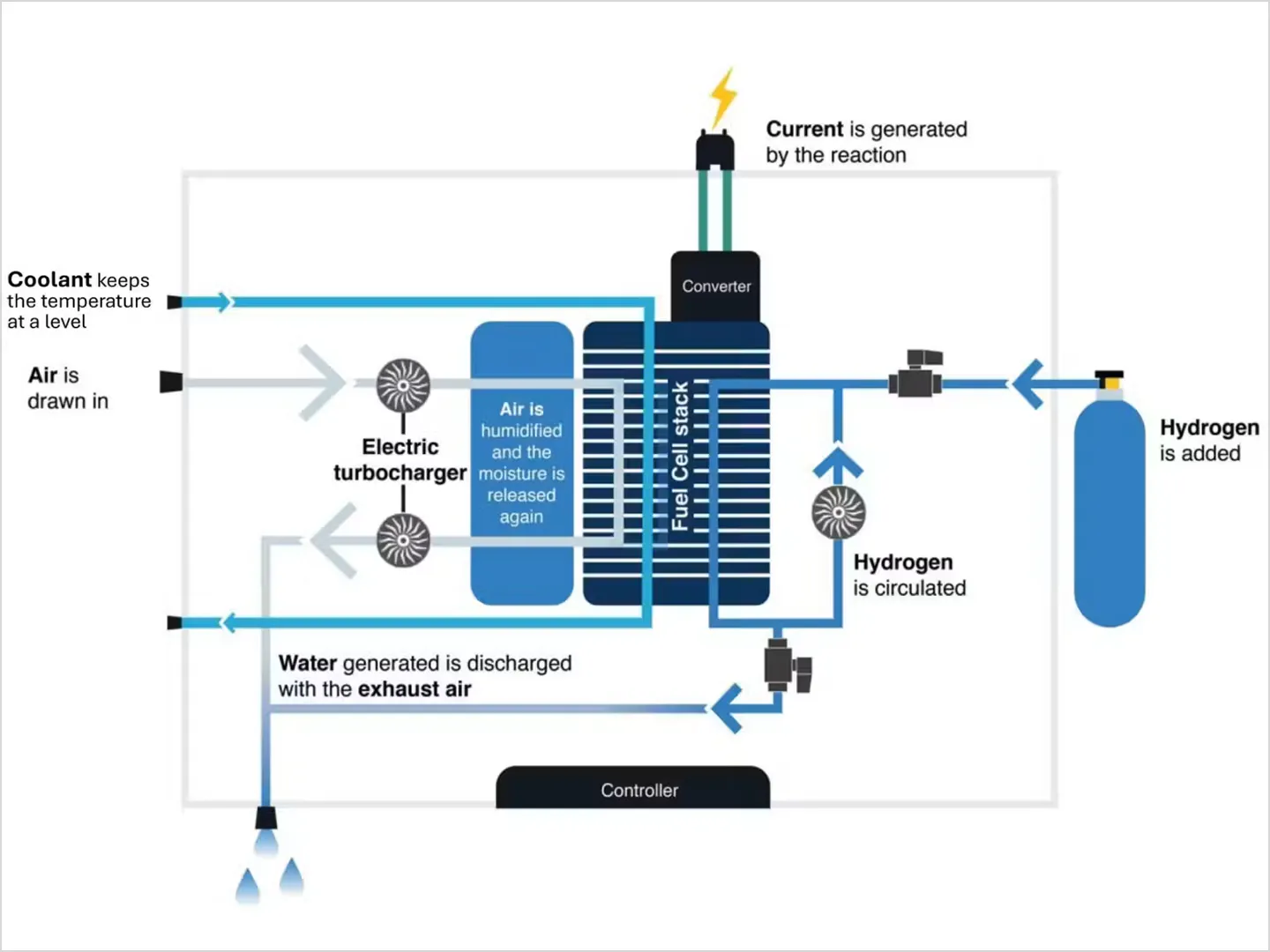
System-level interaction
Within the complete powertrain architecture, cellcentric’s ancillary components orchestrate the media flows. The electric turbocharger raises operating pressure to optimize efficiency, while integrated hydrogen recirculation and specialized thermal management systems ensure stable, automated power generation under all load profiles.
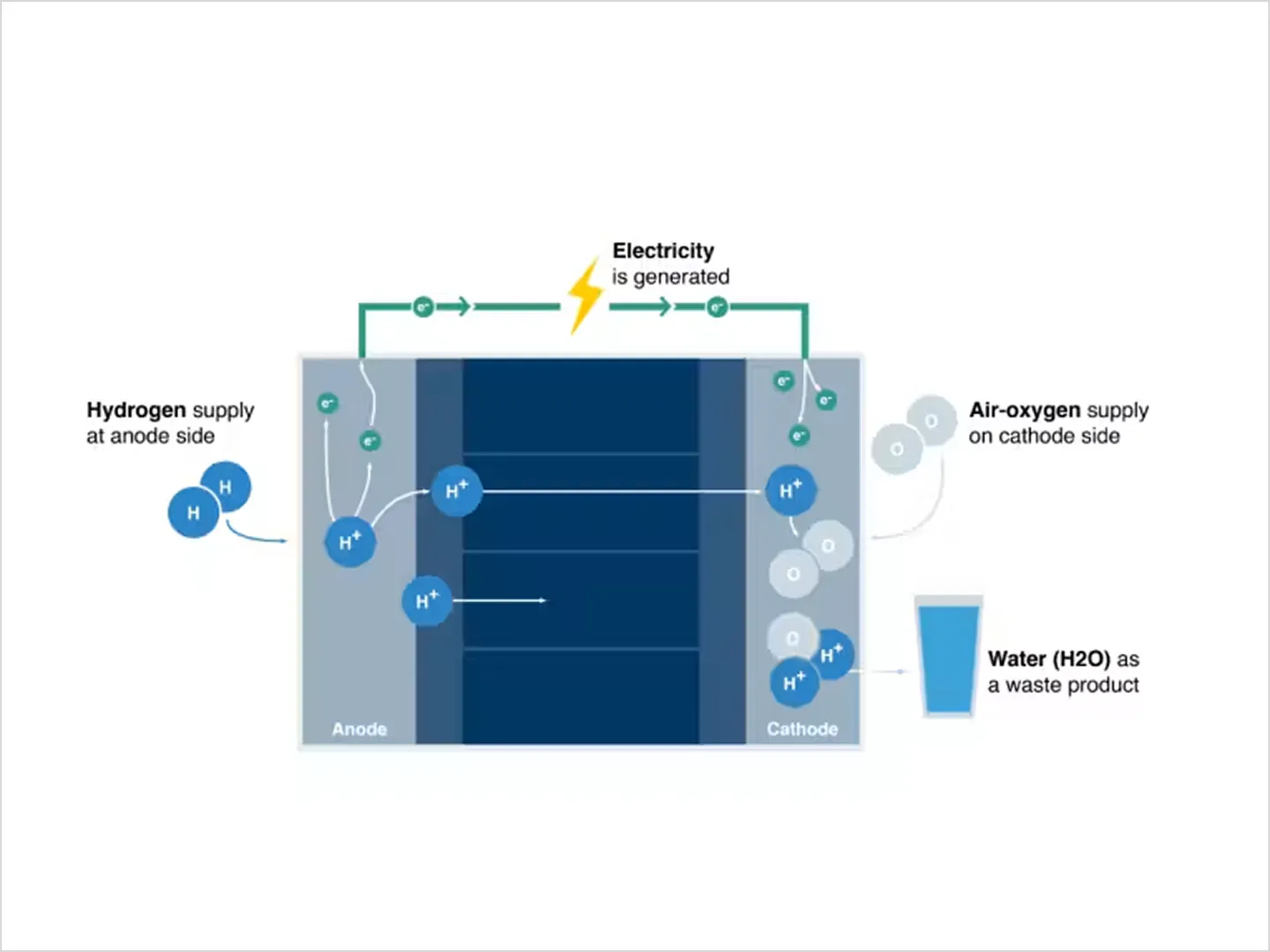
Proton exchange membrane chemistry
At the core of the stack, individual PEM (Proton Exchange Membrane) cells facilitate electrochemical conversion. Continuously supplied hydrogen at the anode side reacts with ambient oxygen at the cathode side. This clean process generates electricity and heat through high-efficiency "cold combustion" - emitting nothing but pure water vapor.
You must accept marketing cookies in order to play the video.
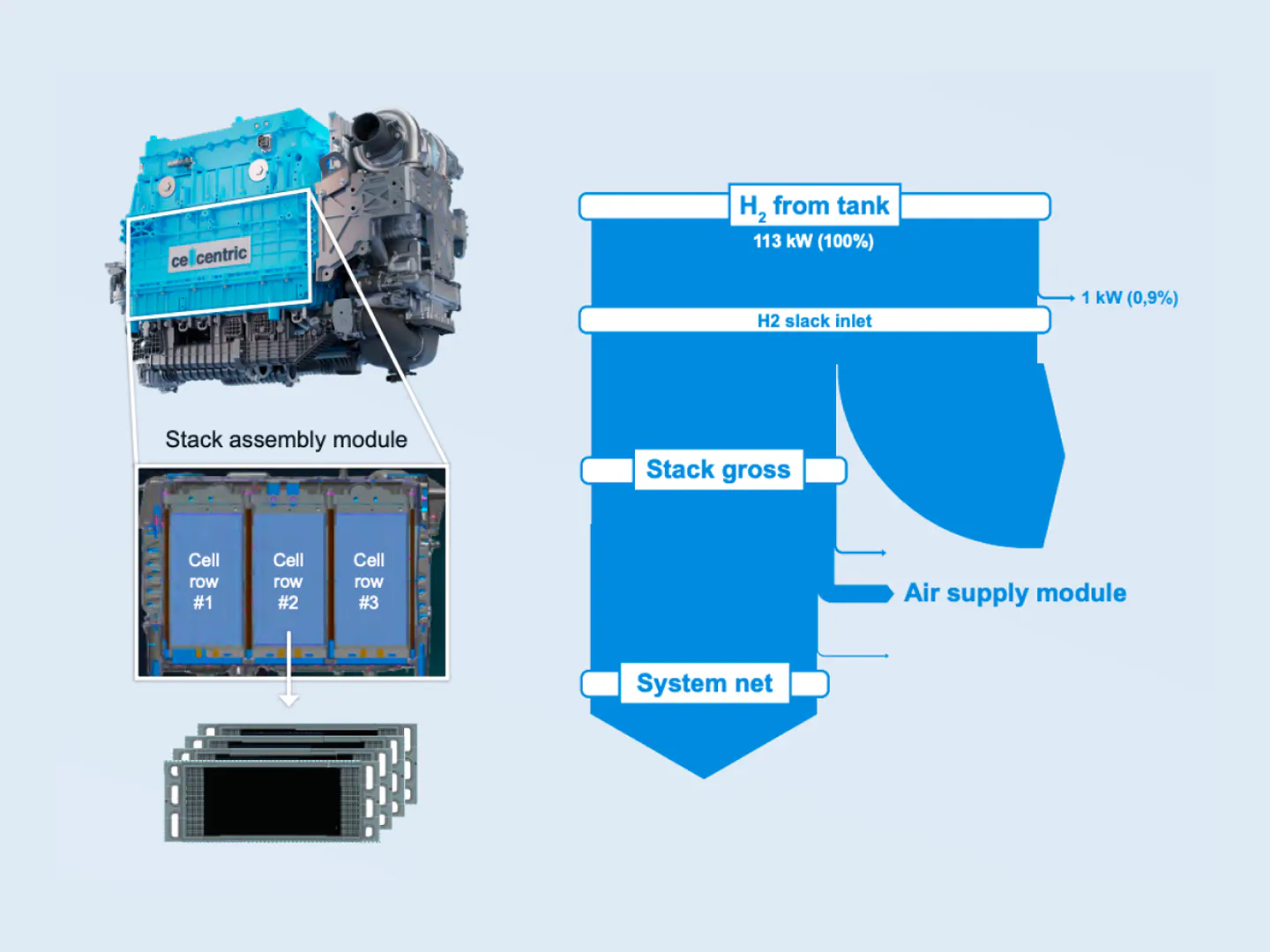
Stack and Unit Cells
The efficiency of BZA375's 3-row stack increases through two complementary approaches: design optimization that creates a larger active surface and thus higher voltage, and improved cell chemistry that delivers higher voltage at the same load. Compared to two BZA150 systems, the standard configuration in a heavy-duty truck, the total active area increases by approximately 40%, while the active area per cell grows by a factor of 2.4, with unit cell efficiency improving significantly as a result. Higher stack efficiency combined with higher tolerances for operating temperature also leads to a strong reduction in vehicle cooling system requirements.
The components that make the difference
Electric Turbo Charger (ETC)
The 2-stage compressor with Variable Nozzle Turbine raises operating pressure from 2.5 to 3.0 bar, improving fuel cell efficiency and humidification at high coolant temperatures. At demanding gradients such as the Brenner Pass or San Bernardino Pass, this translates to up to 50 kW of additional net power at hill climb. The turbine also recovers energy from exhaust gases, saving 16 kW of e-drive power.
Media Distribution Manifold (MDM)
The Media Distribution Manifold is the key enabler for compact 3-row stack packaging. It distributes three media flows, air, hydrogen and coolant, across three cell rows via 3 inlets and 9 outlets. At approximately 65 cm in length, the MDM accommodates a total of 3.5 m of media lines, making it a remarkably compact yet highly capable component.
Hydrogen Recirculation Blower (HRB)
Despite being geometrically smaller than its BZA150 counterpart, the Hydrogen Recirculation Blower delivers 2.5 times the hydrogen mass flow of BZA150 at the same power consumption. This improvement in hydrogen throughput directly supports the higher energy output of BZA375 without adding size or weight to the system.
Fuel Cell Inverter (FCI) and Fuel Cell Control Unit (FCU)
The Fuel Cell Inverter converts voltage from 350-500 V to 540-850 V, while current increases from 600 to 1,100 Amps. The main power output is routed via 4 connectors instead of 2, and 4 additional connectors serve auxiliary consumers such as coolant pumps or fan motors on the truck side, significantly reducing integration effort for OEM customers. The next-generation Fuel Cell Control Unit doubles both input reading capacity and output control capability compared to BZA150.
Explore further
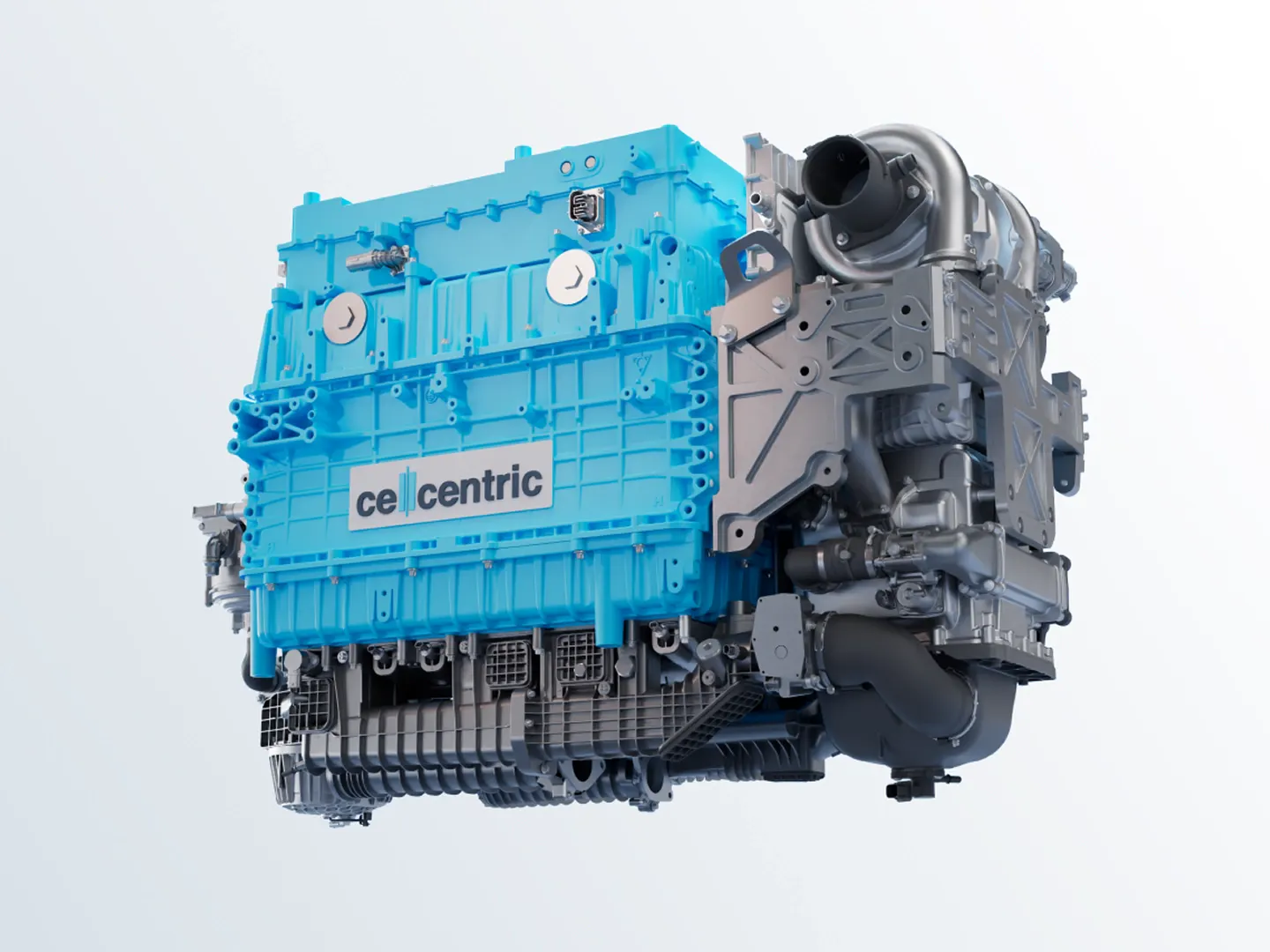
BZA375
Full technical specifications, dimensions, TCO data and FAQ for our next-generation heavy-duty fuel cell system.
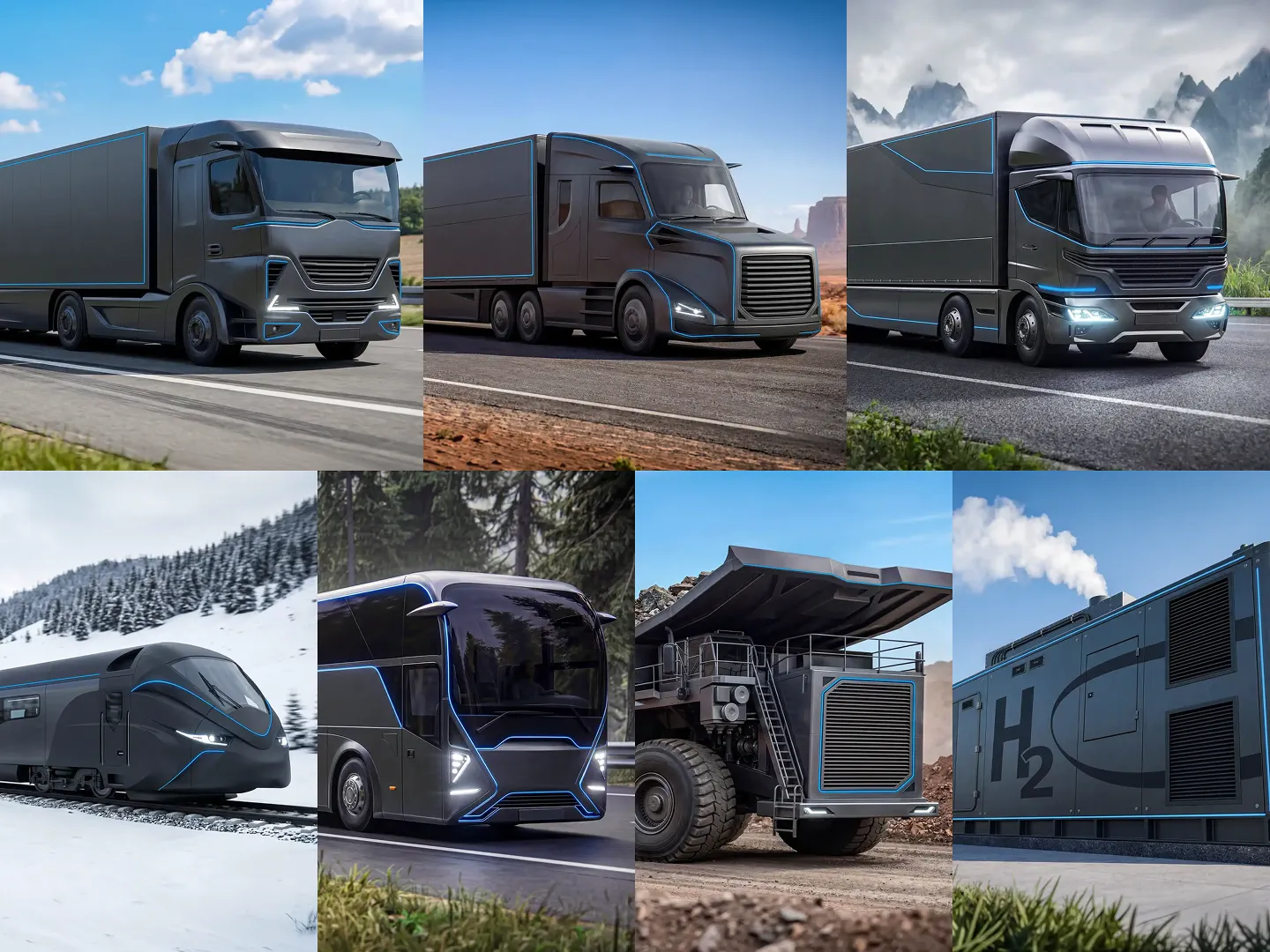
Built for heavy-duty
Designed for long-haul trucks, and well-suited for coaches, stationary power generation, rail and mining. One product, multiple applications.
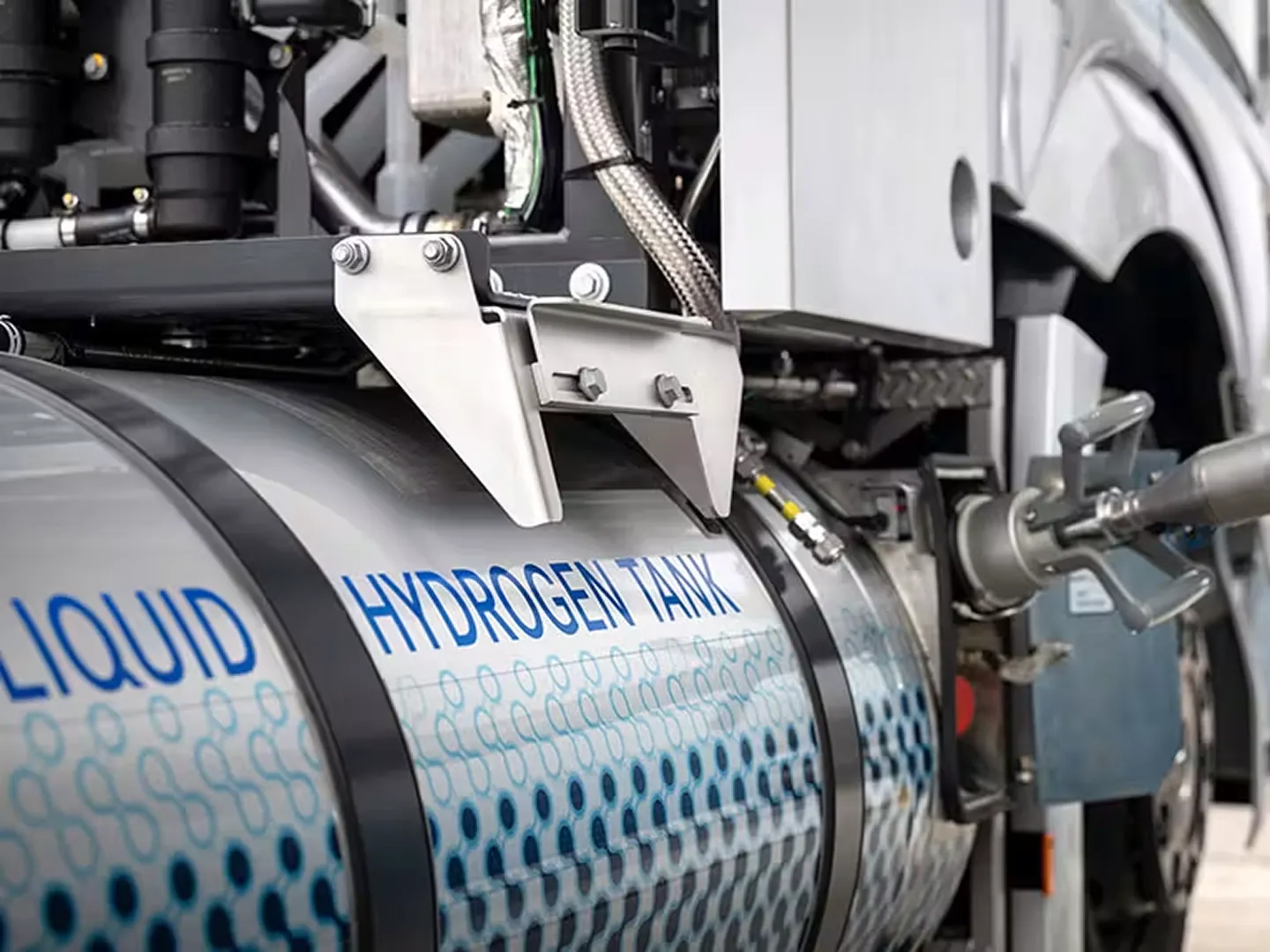
The infrastructure behind it
Efficient fuel cell systems need a functioning hydrogen ecosystem to reach their full potential. See how cellcentric contributes to building it.

Discuss your integration requirements
We are happy to help with general enquiries about cellcentric, our technology and our work.